
For someone recovering from a stroke, traumatic brain injury (TBI), concussion, or head or spinal cord injury, discharge day can feel victorious and also a little like falling off a cliff. It is a major achievement, but it is also the moment when a person in recovery loses important foundational structure and support. In inpatient rehab or hospital care, progress is guided by schedules, trained staff, and built-in safety systems. At home, those supports can disappear overnight, even though the need for consistent follow-through and careful decision-making remains.
The transition to home is a critical next phase of rehabilitation, not the end of it. When it goes well, clients can maintain momentum and rebuild independence in real-life settings. When it goes poorly, safety risks can rise, progress can slow, and families can feel overwhelmed.
At NeuroPraxis, we specialize in in-home and community neurorehabilitation that supports clients and families during this exact window. We partner with referral sources and decision-makers across healthcare and legal systems, and we work with clients to create a personalized rehabilitation plan that protects recovery when structure changes.
Why the Transition to Home Can Disrupt Recovery After Stroke Rehab or Brain Injury Rehab
The move to home introduces complexity. The patient must manage movement, thinking, communication, and emotion while routines change and support decreases. Families are often thrust into clinical-level responsibilities without any training. This transition creates four predictable problems.
- First, safety risks increase. A home may include stairs, narrow bathrooms, rugs, pets, and other clutter. A person with impaired balance, vision, vestibular symptoms, or slowed reaction times can easily fall. Cognitive changes after brain injury can also impair judgment, increase impulsivity, or limit a person’s awareness of their deficits.
- Second, therapy intensity often drops. Even motivated people struggle to replicate the regular rhythm of inpatient rehabilitation once at home. This is why models that bring coordinated rehabilitation into the home setting matter. Evidence on early supported discharge and transitional care for stroke shows comparable outcomes with less time in the hospital when a coordinated team supports rehabilitation at home.
- Third, communication gaps arise. Discharge summaries do not always translate into actionable, day-by-day plans. When services start late or are fragmented, families try to fill the gap, and recovery can stall.
- Fourth, families often assume clinical-level responsibilities without training when specialized neurorehabilitation is not in place. Without guidance from providers trained in neurological recovery, well-intended care can become inconsistent or misaligned with healing needs, increasing stress and risking lost momentum during the transition home.
Personalized Rehabilitation in the Home Aids Recovery
Recovery after stroke, TBI, concussion, or spinal cord injury depends on practicing the right skills often enough that they show up in everyday life. That includes safe walking and transfers, managing fatigue, staying focused in distracting environments, communicating clearly, and rebuilding routines needed for independence at home.
Personalized rehabilitation matters because every injury affects function differently. NeuroPraxis builds a client-centered plan with the individual and family, anchored to personal goals and real-world routines. The care team then delivers rehabilitation where those routines occur: at home and in the community.
This approach aligns with a proven foundation of neurorehabilitation: people improve when therapy targets the tasks and environments that shape daily independence.
In-Home Recovery: Structure Matters More Than Motivation
Motivation helps, but structure drives consistency. After discharge, many clients experience fluctuating energy, cognitive fatigue, and mood changes. Anxiety and depression can also persist after inpatient rehabilitation ends.
Home-based rehabilitation works best when the plan includes a realistic schedule that matches a client’s stamina and builds repetition into everyday routines. Coordinated, team-based support during the transition to home helps maintain intensity and focus, especially when services shift from a facility to real life.
For referral sources, the goal is not simply “more therapy.” The goal is the right therapy, delivered consistently, with clear goals and ongoing oversight.
Brain Injury, TBI, Concussion, and Head Injury: Hidden Risks in the First Weeks Home
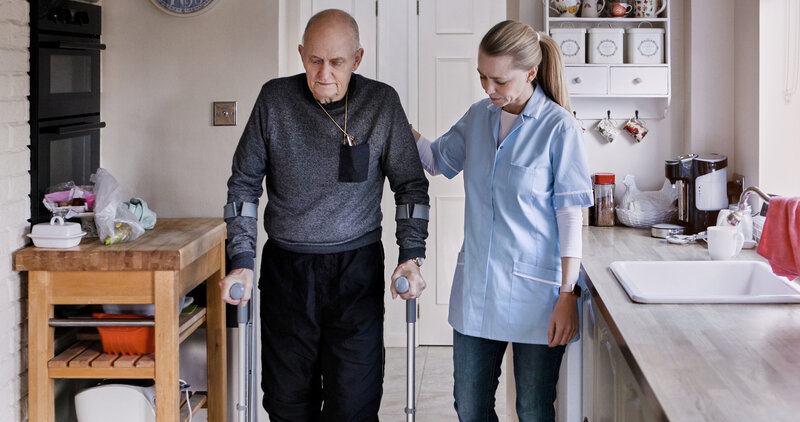
Brain injury recovery often includes challenges that do not show up on a basic physical exam. A person may walk well and still struggle with attention, planning, impulse control, irritability, or social judgment. These issues create safety risks and relationship strains. They can also threaten return to work and reintegration into the community.
In practical terms, the transition plan needs to address cognitive load, symptom triggers, and behavioral supports, not only exercises. This is where an interdisciplinary team can reduce the burden on families and support steadier progress.
Spinal Cord Injury Rehabilitation at Home: Function, Access, and Prevention
Research on spinal cord injury shows that specialized rehabilitation can improve outcomes. Spinal cord injury rehabilitation at home takes real planning, because small barriers can create big safety issues. A doorway that’s too narrow, steps at the entry, a bathroom that won’t fit a wheelchair, or a bed that’s the wrong height can make daily living difficult and unsafe.
Prevention is just as important as progress. Skin protection, safe transfer technique, positioning, and pacing the day can make a big difference in comfort, safety, and long-term outcomes. Hands-on caregiver training is essential so safety and progress don’t depend on guesswork.
NeuroPraxis Services That Support Transition Home and Community Rehab
When someone comes home after a stroke, TBI, concussion, head injury, or spinal cord injury, the goal is not just to provide “more therapy.” The goal is to make daily life workable again for that person.
At NeuroPraxis, we bring rehabilitation into the places where recovery actually happens: the living room, the kitchen, the driveway, the grocery store, the school pickup line, the workplace, and the community. We meet clients where they are and build a plan around what matters most to them and their families.
That might mean helping a stroke survivor safely manage the steps at their front door, not just practice walking in a hallway. It might mean helping a client with a brain injury build a realistic morning routine that does not end in fatigue and frustration by 10:00 a.m. It might mean helping a spinal cord injury patient and caregiver figure out transfers that feel safe and doable, instead of exhausting and scary.
Occupational Therapy: Making Everyday Life Possible Again
Occupational therapy (OT) helps clients rebuild daily living skills and supports practical home adaptations. That can include safer shower setups, strategies for medications and appointments, and realistic approaches to cooking and household tasks. OT also supports caregiver training so families are not left guessing what is safe or helpful.
Physical Therapy: Safe Movement That Works in the Real World
Physical therapy (PT) supports strength, confidence, and safety in real environments. Clients practice what matters most for daily life, including bed mobility, tight spaces, stairs, and walking outdoors on uneven ground.
Speech Therapy: Communication, Thinking Skills, and Connection
Speech therapy supports communication and cognitive skills such as word-finding, attention, memory, and social communication. These skills affect confidence, relationships, and daily tasks like navigating conversations and problem-solving in the community.
Case Management: A Clear Plan When Things Feel Complicated
Families may be juggling medical follow-ups, equipment needs, therapy schedules, and sudden changes in funding or authorization. NeuroPraxis case management helps keep the plan organized and moving forward, with clear documentation and communication for attorneys, case managers, and payers when needed.

Recreational Therapy: Getting Back Into a Life That’s More Than Appointments
Recreational therapy helps clients reconnect with meaningful activities and rebuild confidence in community settings, whether that means returning to hobbies, social routines, or fitness and recreation.
Telehealth: Support When In-Person Is Not Always Possible
Telehealth can help maintain momentum, reduce gaps in care, and provide support between visits. Depending on the client’s needs, telehealth may include symptom check-ins, routine coaching, cognitive strategy sessions, caregiver guidance, and case coordination.
What ties all of this together is not just a checklist of services. It is the way NeuroPraxis personalizes care. We don’t build a plan based on a diagnosis alone. We build it around the individual’s goals, the realities of their home and community, and the support system they have.
Outcomes That Matter: What Clients Report Through NeuroPraxis Rehabilitation
NeuroPraxis tracks outcomes and listens to clients.
In NeuroPraxis’ published outcomes materials based on a 2021 client survey, clients reported substantial improvements across cognition, emotional health, and social connection. Reported findings include improvements in memory and self-awareness, attention and concentration, depression, anxiety, and fatigue.
For the people overseeing care decisions, these areas matter because they often determine whether a person can live safely with less help, reintegrate into the community, and eventually return to work or school.
Caregiver Support During the Transition Home
Families often need practical guidance, not generic encouragement. NeuroPraxis provides practical caregiver resources, including occupational therapy support group modules designed for those caring for someone with a brain injury. Studies show that caregiver support improves the stability of the home environment and reduces burnout risk, which can derail even a strong clinical plan.
Partnering With NeuroPraxis for Transition to Home Excellence
The transition to home is a high-impact handoff that can shape safety, costs, and long-term outcomes for months or even years.
NeuroPraxis supports stroke recovery, brain injury and TBI rehabilitation, concussion and head injury recovery, and spinal cord injury rehabilitation through in-home and community programs grounded in experience, personalized care, and coordinated follow-through. We help clients build real-world skills, support families through the transition and beyond, and provide the structure and oversight that encourages forward momentum and protects progress.
If you are planning a discharge, managing a complex case, or supporting a family that needs assistance, NeuroPraxis is here to help. Call our team at 888.266.8921 to discuss next steps, or send an email to hello@neuropraxisrehab.com. You can also submit a referral through our website: https://neuropraxisrehab.com/online-referral/.