
Key Takeaways
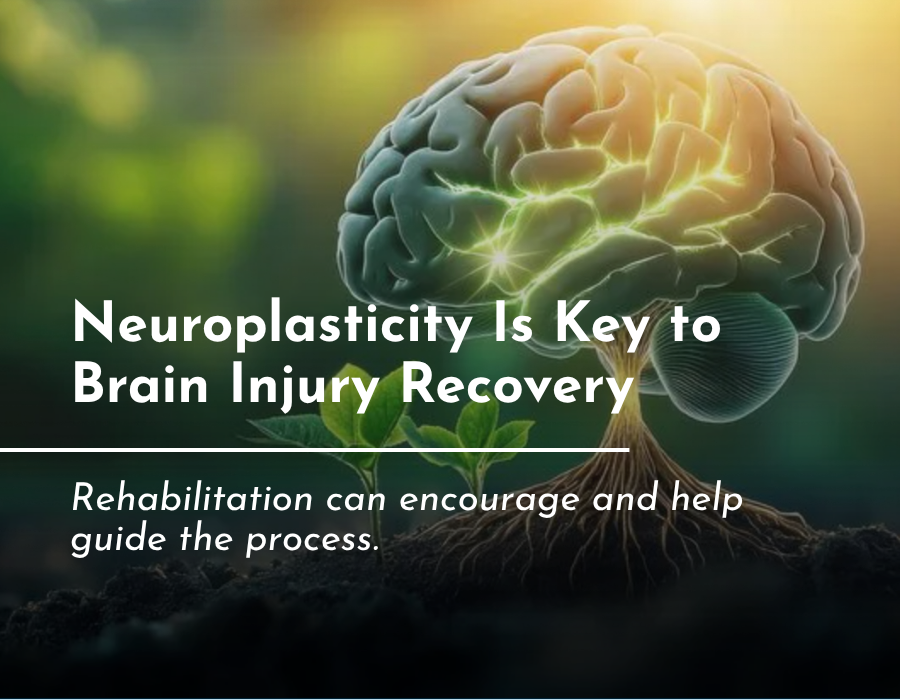
For most of modern medical history, scientists believed that, other than growth periods in childhood, the human brain was fixed by adulthood. If your brain was damaged, the chances for recovery were limited. People who experienced a stroke, brain injury, or other neurological event or condition were often advised that they would improve for a short period of time and reach a permanent plateau where recovery would stall and stop.
Today, neuroscience tells a very different story.
One of the most important discoveries in brain science has been the confirmation that the brain grows and changes throughout a person’s life, from birth until death. Your brain forms new connections, strengthens and weakens pathways, and reorganizes neural networks at every age. This remarkable ability is called neuroplasticity.
Neuroplasticity doesn’t mean the brain can magically repair every single injury. It doesn’t guarantee a full recovery every time. However, it does mean that the possibility of improvement is there months, years, and even decades after a brain injury, including concussion, stroke, traumatic brain injury (TBI), acquired brain injury (ABI), or spinal cord injury (SCI).
This fact explains why neurorehabilitation with an intricate understanding of how the brain works and heals can have such a powerful impact on long-term recovery outcomes. Harnessing neuroplasticity to heal provides something many people need after a brain injury: hope grounded in real science.
What Is Neuroplasticity?
At the basic level, neuroplasticity is an umbrella term referring to the many capabilities of your brain to reorganize itself, both form and function, due to your environment, behavior, and internal happenings. So, experiences, relationships, and even the thoughts you have shape your brain.
Your brain contains literally billions of neurons that communicate through an elaborate network of connections called synapses. These connections aren’t permanent. They strengthen, weaken, and reorganize based on how you use them. Your life sculpts your brain through neuroplasticity by the way of electrical impulses. Every experience, conversation, movement, and thought you have influences how your synapses are connected. When you repeat something, those connections and pathways grow stronger.
Think of your brain like a living map. The roads on that map are constantly changing. Frequently used routes become wider and more efficient. Routes that are rarely used weaken over time and may even disappear. New pathways can form when your brain encounters new challenges or opportunities.
This process occurs every single minute of your life. In fact, neuroplasticity is happening right now as you read these words.
Your Brain Changes Every Day
While neuroplasticity is the essential process for brain injury recovery, it is also responsible for many of the changes that happen in everyday life, both good and bad.
When you learn a new skill, practice a sport, memorize a person’s face and name, or navigate a new route somewhere, your brain changes to store that information. When you repeat something, the neural pathways involved in those activities strengthen. Over time, they become more efficient. Neuroplasticity is how all learning takes place and how all memories are stored.
Think about learning to drive. At first, every action requires conscious effort. You have to think about every little thing, like steering, mirrors, traffic signs, and what other vehicles are doing all at the same time. Eventually, with repetition, many of those actions become automatic for your brain. You don’t really even have to think about them.
The task didn’t change. Your brain did.

How Does Neuroplasticity Support Brain Injury Recovery?
Neuroplasticity becomes especially important after a neurological injury. A stroke, concussion, brain injury, ABI, TBI, or SCI can disrupt networks responsible for movement, communication, memory, attention, balance, emotional regulation, and other important functions. Fortunately, your brain can adapt, re-route, and isn’t entirely dependent on existing pathways.
Imagine a major highway is suddenly closed. Traffic stops for a while but not forever. Drivers figure out and begin using side roads and alternate routes to reach their destination. The more those new routes are used, the more efficient they become.
Your brain works in a similar way.
When injury disrupts the existing neural pathways, healthy areas of the brain can sometimes strengthen existing connections or develop alternative routes to support functionality. Rehabilitation that knows how to direct neuroplastic change can help encourage this process through targeted practices, repetition, and meaningful activities.
This is one reason rehabilitation is often most effective when it focuses on real-life goals and activities for brain injury recovery that matter to the individual in their daily lives.
Neurons That Fire Together Wire Together
One of the most important principles of neuroplasticity comes from psychologist Donald Hebb, whose work led to a concept often summarized as: “Neurons that fire together wire together.” When groups of neurons activate repeatedly at the same time, the connections between them become stronger. The brain becomes more efficient at using those pathways.
This principle helps explain why repetition matters so much in rehabilitation.
Every time someone practices standing, walking, speaking, remembering information, or completing daily tasks, specific neural networks become active. Repeated activation reinforces those networks. This process doesn’t happen overnight. Building stronger neural pathways is similar to strengthening a muscle. Consistent practice produces gradual changes that accumulate over time. This is why consistent rehabilitation is necessary to encourage neuroplasticity and the best recovery outcomes.
Use It or Lose It
Another important principle of neuroplasticity is “use it or lose it.” Every time you practice a skill, your brain strengthens the neural pathways that support it. When you stop using a skill, those pathways gradually weaken. This principle affects everyone, not just people recovering from injury.
For individuals recovering from brain or spinal cord injury, stroke, or concussion, this principle highlights the importance of continued engagement in meaningful activities to regain skills and functionality. Consistent participation helps reinforce the neural networks involved, even when something is difficult. If an action is challenging after injury, it is an indication of exactly where you need to focus your efforts to see improvement. The more you practice, the more your brain will wire to facilitate the action.
Rehabilitation is not simply about exercising muscles. It’s about helping your brain learn to repeatedly activate and rebuild the networks needed for everyday function.
Neuroplasticity Can Be Positive or Negative
Neuroplasticity is neither good nor bad, but it has the potential to help or hurt you. The same characteristic that makes our brains amazingly resilient, also makes them vulnerable to outside and internal, usually unconscious, influences.
It’s because of neuroplasticity that bad habits and addictions become ingrained in the brain, valuable skills are lost as the brain ages, and some brain illnesses and conditions develop in humans. For example, physical activity, cognitive challenges, social engagement, and learning new skills can strengthen healthy neural networks.
On the other hand, neuroplasticity isn’t always beneficial. Researchers refer to harmful changes as maladaptive neuroplasticity. Chronic stress, inactivity, social isolation, and avoidance behaviors can strengthen neural pathways that reinforce unhealthy patterns. Studies show that chronic stress can reshape brain circuits involved in emotion regulation, decision-making, and behavior, contributing to depression, anxiety, obsessive-compulsive behaviors, phobias, and other mental health conditions.
Your brain becomes more efficient at whatever it practices most often.
This is one reason rehabilitation professionals focus on helping individuals engage in activities that support mental health, recovery, independence, and participation in daily life. Research shows that through targeted practice, learning, exercise, and rehabilitation, people can intentionally shape neural pathways in ways that improve cognitive, physical, and functional abilities.

Why Personalized Rehabilitation Matters
No two brains are exactly alike and no two injuries are exactly alike. Even when people receive the same diagnosis, their symptoms, strengths, challenges, and brain injury recovery experiences can be very different. The location of injury, overall health, age, lifestyle, support system, and personal goals all greatly influence recovery.
Because every brain is unique, rehabilitation needs to be personalized. A customized rehabilitation plan helps identify the skills, activities, and goals that are most meaningful to the individual while creating opportunities to engage neuroplasticity in ways that support functional improvement for them.
Increasingly, brain injury is being recognized as a chronic condition that can have lifelong effects. While that reality may sound discouraging, the good news is that neuroplasticity is lifelong too. The brain retains the ability to adapt, change, and learn throughout life. Progress can continue months, years, or even decades after an injury. Everyone’s recovery journey is different and unfolds on its own timeline, but most people can benefit from ongoing rehabilitation, support, encouragement, and opportunities to challenge their brains in meaningful ways. Recovery is not just about returning to life after injury. It is about continuing to grow, adapt, and live as fully as possible.
Can Brain Injury Recovery Happen Years After Injury?
The answer is yes. Neuroplasticity provides scientific evidence for brain injury recovery and a reason for hope.
One of the most encouraging findings in neuroscience is that neuroplasticity continues throughout life. Researchers now understand that the brain retains the ability to adapt well beyond childhood. While neuroplastic change occurs more slowly with age, the capacity for learning and adaptation remains. For individuals recovering from brain injury, concussion, stroke, or spinal cord injury, this is an important message of hope.
Increasingly, brain injury is recognized as a chronic condition with effects that can last a lifetime. Fortunately, neuroplasticity is lifelong too, creating opportunities for continued adaptation, rehabilitation, and progress throughout life.
Brain injury recovery is rarely a straight line. Progress often occurs gradually and requires effort. Neuroplasticity does not guarantee a specific outcome. However, it helps explain why continued rehabilitation, meaningful activity, and consistent engagement can support recovery and even continued improvement months, years, or decades after an injury occurs.
The Bottom Line
Science has confirmed without a doubt that we can access neuroplasticity for positive brain change at any age and to facilitate brain injury recovery. Neuroplasticity has possible positive applications in many areas, including medicine, psychiatry, psychology, relationships, education, and more. Guiding neuroplasticity helps an injured brain adapt and recover. When you know how neuroplasticity works, you can encourage and guide it to help your brain heal.
For individuals with neurologic injuries, specialized neurorehabilitation can be the difference between plateau and progress. NeuroPraxis builds individualized care plans that connect therapy directly to real-world function, long-term independence, and outcomes.
NeuroPraxis partners with physicians, case managers, discharge planners, workers’ compensation professionals, attorneys, and families to support long-term spinal cord and brain injury recovery through individualized neurorehabilitation services. If you are supporting a family member or client who needs ongoing recovery care, contact NeuroPraxis today for assistance. Call our team at 888.266.8921 to discuss the next steps or send us an email to hello@neuropraxisrehab.com. You can also submit a referral through our website: https://neuropraxisrehab.com/online-referral/.
This is such an important message. For years, many people were told they had reached a “plateau” and that further recovery wasn’t possible. Neuroplasticity has helped change that conversation by showing that the brain can continue to adapt and learn throughout life. Recovery may not be easy or predictable, but understanding how the brain changes provides a scientific reason for hope and a strong case for personalized rehabilitation.
Learning about and harnessing neuroplasticity allowed me to heal from a serious brain injury. It did not happen quickly. It took about three years, but with encouragement and focus, it did happen.