
The best leisure activities to promote neuroplasticity combine something you enjoy with something you learn. You don’t need an expensive brain-training subscription or a passport— although those are great tools if you have them. All you really need are activities that spark your interest and curiosity, require focused attention, and present opportunities to learn.
These ideas apply to anyone interested in lifelong learning and brain health. For people recovering from brain injury, activities that encourage brain neuroplasticity can also become meaningful parts of an individualized recovery plan.
How Leisure Activities Support Brain Neuroplasticity
Neuroplasticity is your brain’s ability to change its connections and patterns of activity in response to experiences in your life. In other words, what you do repeatedly changes your brain both physically and operationally. Neuroplasticity is what allows all learning and memory to happen whether it’s knowing all the words to your favorite song, navigating a new city, or figuring out how to complete everyday tasks.
As we explain in the article, Neuroplasticity After Brain Injury: 8 Proven Ways to Support Recovery, learning skills and the resulting brain neuroplasticity depends on what you practice, how you practice it, how important it is to you, called salience, and other factors. That personal meaning helps hold your attention and motivates you to practice, supporting neuroplastic change.
Research on reading, music, dance, and learning new skills offers encouraging examples of the brain’s ability to adapt. The ideas below offer enjoyable ways to introduce more learning and neuroplasticity into everyday life while improving skills such as attention, memory, and coordination. For people recovering from brain injury, these activities can also be opportunities to work toward individual rehabilitation goals and reconnect with favorite hobbies and interests.
Start by choosing an activity that sparks your interest and curiosity. Adapt it to your abilities, but leave room for a little challenge. Give yourself permission to be a beginner and make mistakes. That’s when your brain learns. You might even discover a new favorite hobby!
Try a Recipe You’ve Never Made
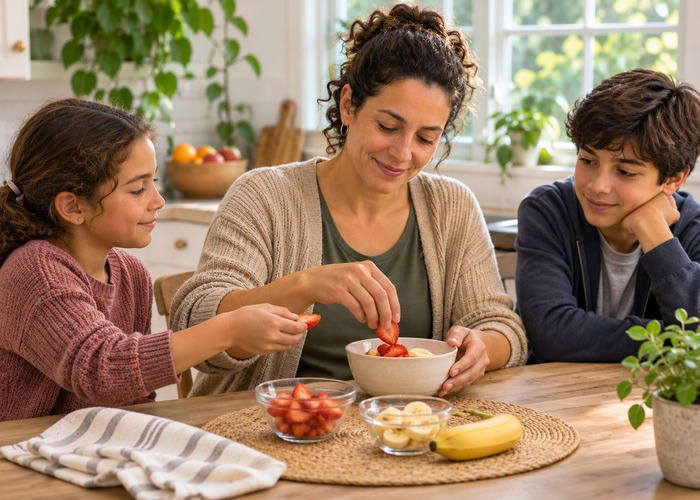
Preparing a new recipe asks you to organize ingredients, follow a sequence, measure, keep track of time, and adjust when something doesn’t go as planned. I’ll bet you never knew that cooking dinner was exercising your executive function skills!
Ideally, you’ll want to prepare a dish that stretches your talents. If you already are efficient at putting together soup, try making bread from scratch. If cooking is completely unfamiliar, you can start small by assembling a simple salad or a no-cook snack. Repeat the process another day so the experience becomes a skill, rather than a one-time experiment.
For someone working toward greater independence after brain injury, preparing a meal can connect a leisure activity with a meaningful functional goal encouraging brain neuroplasticity. A rehabilitation professional can adapt the steps, equipment, and supervision for the most benefit.
Explore Somewhere New
A new place gives your brain something novel to figure out. Whether you travel to another country or visit a nearby park, museum, or neighborhood, exploring creates opportunities to pay attention, make discoveries, and form new memories. An adventure can be ten minutes from home.
Finding your way involves the hippocampus, a brain region important for memory and spatial navigation. A study of London taxi drivers offers a striking example of its adaptability: trainees who mastered the city’s layout over several years developed structural changes in this of the brain. For a leisure outing, the idea is to make exploration an active experience. Notice your surroundings, learn where things are, and connect what you discover with what you already know.
Try turning off your GPS and following a map, identifying landmarks on a walking tour, or telling someone about your excursion afterward. During brain injury recovery, a short exploratory outing with a familiar companion can be more manageable, taking time to pause and rest as needed.
Read a Book Outside Your Usual Genre
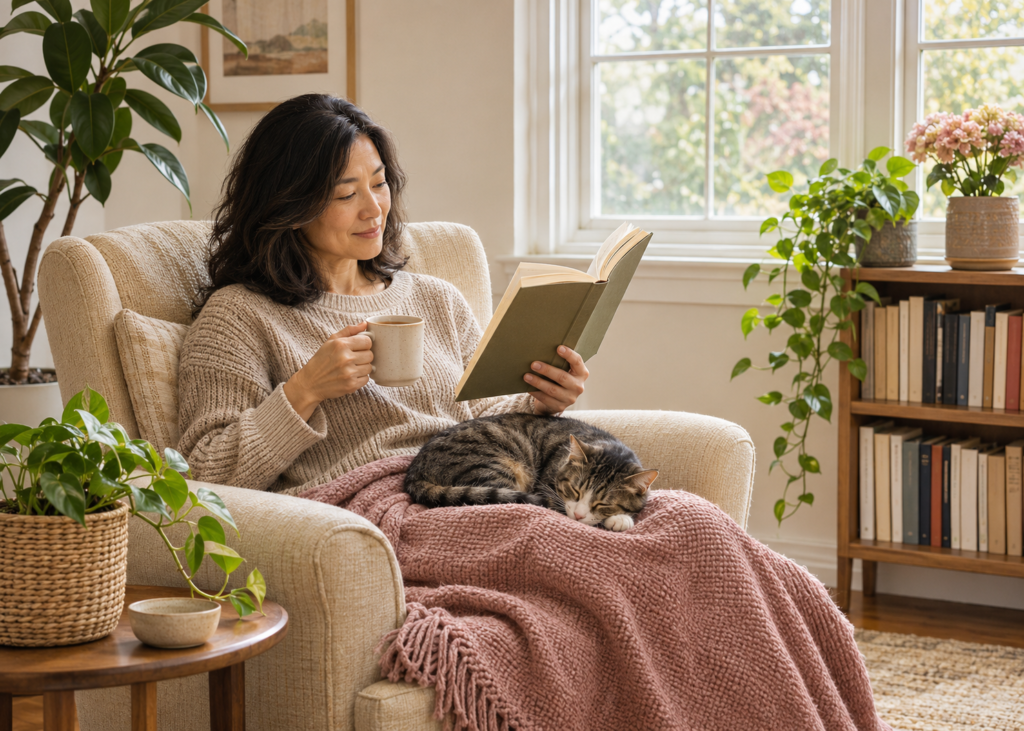
Do you always reach for a mystery or romance? Try historical fiction, a memoir from another culture, or a collection of short stories. New vocabulary, unfamiliar settings, and different storytelling styles give your brain fresh material to understand and remember. Your brain loves novelty.
In a small brain-imaging study, reading a novel was associated with changes in brain connectivity. The study offers an interesting glimpse of the brain’s response to a new kind of story, although it did not measure lasting cognitive benefits.
Read a few pages, then try to retell what you read to someone. After brain injury if reading is tiring, choose shorter passages, larger print, or an audiobook that goes at a comfortable pace. A book club can add conversation and different perspectives.
Let Your Other Hand Have a Turn
Wipe the counter, brush your teeth, or move your computer mouse with your non-dominant hand. You may find that what is normally a simple task suddenly requires your full attention—and that’s a good thing!
In a study of nondominant-hand drawing practice, healthy adults improved their drawing control after training, and improvements were associated with changes in functional brain connectivity. A seemingly simple skill gave researchers a way to observe actual learning-related brain neuroplasticity.
Start with a comfortable, low-risk task. One simple exercise is to hold a writing instrument in both hands and draw half circles vertically down lined paper stopping at each line. After brain injury or stroke, these kind of activities can encourage regaining skills with an affected hand. A therapist can advise you as to which movements and activities best fit your rehabilitation needs and goals.
Learn Some New Dance Moves
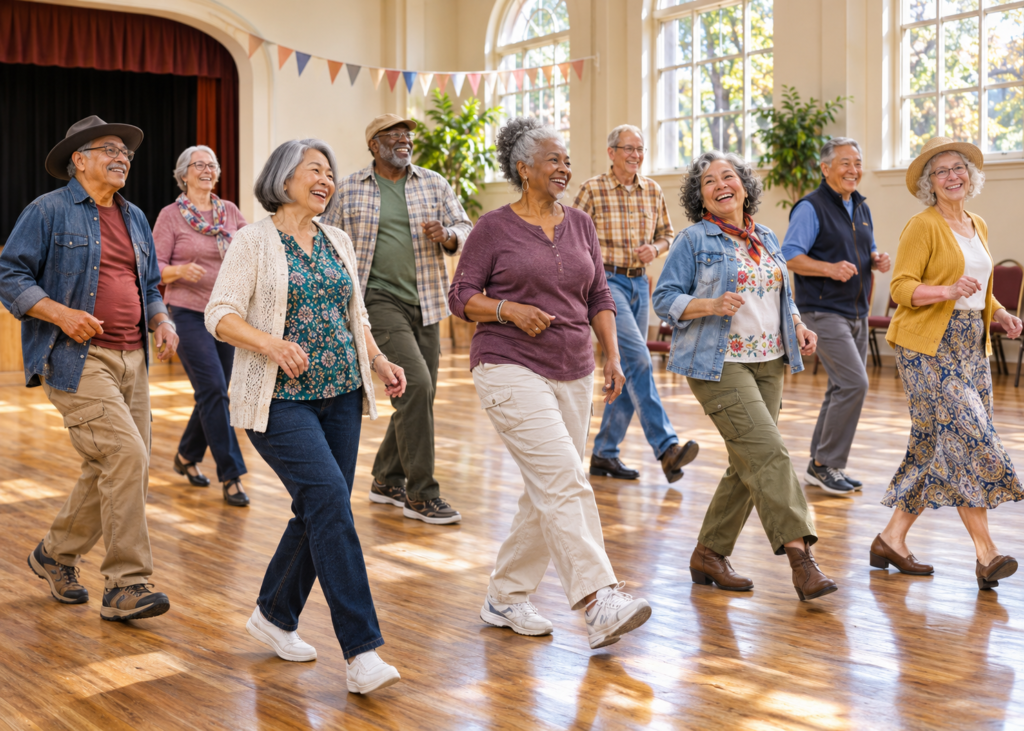
Activities that combine thinking and movement give your brain a workout with several skills to practice at once. Learning a dance sequence draws on rhythm, attention, and memory as you move. Playing table tennis calls for hand-eye coordination and quick judgments about timing and distance. And if you miss a step or a shot, it’s okay to laugh and try again. Mistakes are part of learning.
In a small 18-month study comparing dance with fitness training, healthy older adults in both groups showed changes in hippocampal volume in their brains. The dance group showed changes in additional hippocampal regions and improved their balance scores. The dance program kept introducing new steps and sequences, giving participants more for their brains to learn as they progressed.
Try a beginner line or ball room dancing class, or maybe a Zumba class. If you can’t stand, seek out classes with adapted seated choreography. Anything combining movement and music is going to help your brain. Begin slowly and add step layers as you feel comfortable and as the original pattern becomes familiar. You will want to choose movements that suit your balance and mobility, but you also want to challenge your brain.
Give Your Walk a New Twist
If walking is part of your routine, you’ll want to mix it up and do something different to engage your brain. Explore an unfamiliar route, or learn to identify a trees or birds along the way, or walk mindfully really noticing the sky, the sounds, and your feet connecting with the ground.
You can also pause at a safe spot to notice your surroundings. For example, I like to stop and study a small patch of ground and see how much life I can observe in it or take note of how many different sounds I can hear. These changes add stimulating your brain and learning to a routine activity.
If it is within your capability and you can do it safely, you might try walking backward. The practice has a place in rehabilitation. A small randomized trial after stroke found greater improvements in walking speed with supervised backward-walking training than with standing-balance training. Because you cannot see behind you, your brain has to pay attention and recalibrate a routine movement. If you have balance, vision, dizziness, or mobility concerns, you’ll want to practice with supervision and support.
Make Music Part of Your Free Time
Because it is one of the few things that engages your entire brain, music has a multitude of brain benefits. You can learn to play an instrument or a a few chords, sing a new song, tap out a rhythm, or join a community choir. There are many ways you can enjoy music that benefit your brain, including simply listening to it.
In a randomized study of people recovering from stroke, those who listened daily to music they chose showed greater improvement in verbal memory and focused attention than those assigned to audiobooks or to standard stroke care and rehab without a listening activity. Music therapy has also been shown to be helpful in recovery and encouraging brain neuroplasticity.
You can learn more about music’s effect on the brain in our blog, The Effect of Music on Cognition, which explores music’s connection with attention, memory, movement, and emotion.
Learn a New Hands-On Craft
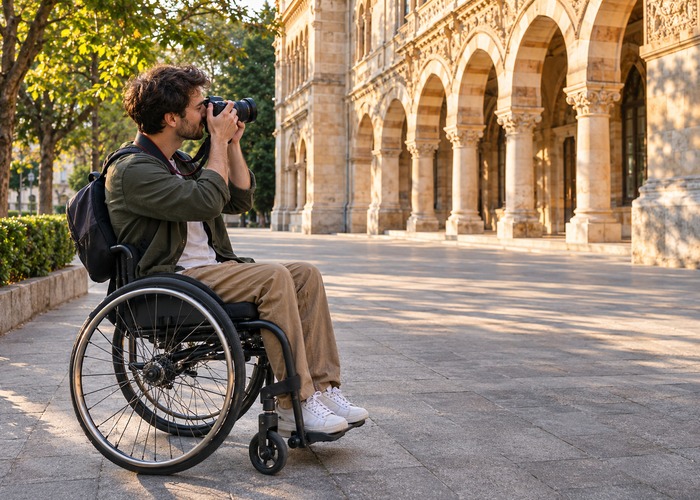
Your phone’s camera can be the starting point for learning the art of photography. Knitting, quilting, coloring, pottery, and any similar activity can offer opportunities to follow instructions, solve problems, and improve through practice.
In the Synapse Project, older adults assigned to learn demanding skills such as digital photography or quilting showed improvements in episodic memory compared with nonintellectual activities with a social group or low-demand cognitive tasks with no social contact. The program involved substantial practice over approximately three months, with the strongest evidence favoring photography.
You will want to start by choosing a manageable project small enough to finish: photograph five interesting lanscapes, learn one knitting stitch, or sketch the same fruit bowl over several days. Don’t overwhelm yourself at the beginning. Just have fun! Keep going and keep upping the challenge. Compare your progressive attempts and focus on one detail to work on. The brain benefit comes from doing, learning, and improving, even if the finished product isn’t prize-worthy.
Make a Friend Outside Your Usual Circle
A friendship with someone of a different age, cultural background, or life experience can introduce your mind to unfamiliar perspectives, stories, and interests. A class, community garden, volunteer project, or book discussion group can bring diverse people together and give participants a common place to begin.
Research on intergenerational volunteering through Experience Corps offers one example of meaningful engagement. A small study of older adults helping elementary school children reported improvements in executive performance and changes in related brain activity. The program combined cognitive, social, and physical demands, so the results cannot be attributed to friendship alone.
You can start much smaller: invite an acquaintance for a walk or ask a fellow hobbyist how they learned their craft. Let mutual interests guide the connection. Learning from another person can encourage brain nseuroplasticity and be a pleasure on its own.
Learn a Different Language
Learning a second language gives your brain a stimulating challenge. A study of older adults found improvements in cognitive skills after language learning, while research on bilingualism has linked speaking two languages with a later onset of dementia symptoms. A small longitudinal study of adult language learners documented white matter changes during an intensive nine-month Chinese course.
Choose a language connected to a place, person, film, or culture that interests you. You can learn a few phrases, like a greeting or how to order a favorite dish. Again, it is the doing and learning that is beneficial and encourages brain neuroplasticity. It doesn’t matter how well you speak or if you ever become fluent.
After brain injury, a speech-language pathologist can help you determine whether new-language learning and which one suits your current communication needs and priorities.
Make Brain Healthy Hobbies Work for You
There is no single best hobby for every brain. Your interests, symptoms, health, resources, and goals all factor in. To encourage your brain to grow, start with one activity you want to do and make the first step achievable.
You might read one short story, prepare one part of a meal, or learn one dance move. Return to the activity often and gradually increase the challenge. Checklists, adaptive equipment, a quieter setting, and assistance from another person can support successful participation.
Make sure to build in rest and protect your sleep. If an activity repeatedly worsens symptoms or leaves you exhausted, adjust the duration, difficulty, or support with your rehabilitation team. Enjoyment has an important place in a recovery plan, too.
The best way to encourage brain neuroplasticity is to connect a learning activity to an outcome that matters to you. Cooking might be a way to accomplish living more independently. Taking a photography class might be a way for you to connect with people in the community with similar interests. Reading a book might mean being able to return to a favorite pasttime. Goals should be personally meaningful and motivate you to practice in a useful direction.
Frequently Asked Questions About Neuroplasticity Activities
What Are the Best Hobbies for Neuroplasticity?
Look for activities that combine enjoyment with active learning and an achievable challenge, but not too easy. Reading, cooking, dancing, music, photography, crafts, language learning, and social activities offer different ways for your brain to learn and grow. The best fit depends on your interests and the skills you want to develop.
How Much Time Should You Spend on Neuroplasticity Activities?
There is no established daily dose that works for every hobby or person. Begin with an amount you can manage comfortably and repeat it consistently. Your brain learns and changes from repetition. After brain injury, your rehabilitation team can help tailor the duration, difficulty, and rest breaks to your needs.
Can Leisure Activities Help With Brain Injury Recovery?
Meaningful leisure activities can provide opportunities to practice skills, reconnect with others, and participate more fully in daily life. Within an individualized rehabilitation plan, hobbies can complement targeted professional services and help individuals connect practice to real-world goals.
Personalized Rehabilitation for the Life You Want to Live
The activities you look forward to can be valuable starting points to encourage brain neuroplasticity and recovery. They give your care team a practical way to connect rehabilitation with your interests, routines, and meaningful individual goals.
NeuroPraxis provides individualized, in-home and community neurorehabilitation for people with brain and spinal cord injuries. Our interdisciplinary team develops care plans around each client’s needs and adapts meaningful activities to support progress toward greater independence, participation, and quality of life.
We collaborate with physicians, case managers, discharge planners, workers’ compensation professionals, attorneys, and families to support recovery where daily life happens. To explore personalized rehabilitation for yourself, a family member, or a client, call 888.266.8921, email hello@neuropraxisrehab.com, or submit an online referral.