
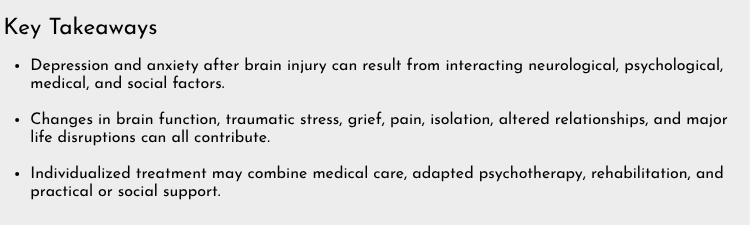
Depression and anxiety after brain injury can have neurological, psychological, and social causes. Often, several of these factors interact. Damage may disrupt communication among brain regions that regulate mood, motivation, threat detection, stress responses, and emotional control. At the same time, trauma, loss, isolation, pain, and major life changes can prolong stress responses, intensify grief and uncertainty, and reduce social support.
Depression and anxiety can affect sleep, appetite, digestion, energy, cognition, pain, physical health, and relationships. They can also limit participation in rehabilitation, intensify existing brain injury symptoms, and interfere with everyday functioning and progress. Recognizing and managing these conditions is an important part of comprehensive brain injury rehabilitation and long-term recovery.
How Common Are Depression and Anxiety After Brain Injury?
Depression and anxiety are common after brain injury, although estimates vary by injury severity, timing, and research method. A systematic review and meta-analysis estimated that 17 percent of people experienced a depressive disorder and 21 percent experienced an anxiety disorder during the first year after traumatic brain injury (TBI).
Some clinical groups show much higher rates. In a study of 559 adults hospitalized with complicated mild to severe TBI, 53 percent met criteria for major depression at least once during the first year. Depression was also associated with higher levels of anxiety and poorer quality of life.
Symptoms of depression and anxiety may begin soon after injury or show up later on in the recovery journey. One five-year study found that emotional distress didn’t follow any predictable pattern. Some people improved with time, while others continued to struggle or developed new challenges later in their recovery. These findings add to evidence that brain injury can be a chronic condition requiring ongoing, long-term physical and mental support.
Can Brain Changes Cause Depression and Anxiety?
Yes. A brain injury can disrupt prefrontal-limbic system brain networks involved in regulating emotion, motivation, threat detection, memory, and decision-making. There is no single “depression center” in the brain, and the condition can result from altered communication across these networks.
In one study, major depression after TBI was associated with reduced left prefrontal gray matter volume, greater executive dysfunction, and poorer social functioning. Other research found altered communication involving the amygdala, a brain region involved in processing emotions and detecting threats, in people with chronic TBI and depressive symptoms.
Brain injury can also contribute to mental health conditions indirectly. Sleep disruption, chronic pain, cognitive fatigue, medication effects, seizures, and hormone and metabolic changes can affect mood while resembling or contributing to depression and anxiety.

Psychological Trauma and Loss Matter
The event that caused the injury may itself be traumatic. A collision, fall, assault, combat exposure, medical emergency, or prolonged hospitalization can be psycholigically traumatic. Intrusive memories, avoidance, hypervigilance, and persistent fear may be signs of post-traumatic stress disorder (PTSD), which is associated with changes in brain networks involved in threat detection, memory, and emotional regulation. Symptoms of PTSD, depression, anxiety, and brain injury can all overlap, making accurate diagnosis more complicated.
Many survivors grieve how their lives have changed. They may have lost a job, independence, income, relationships, familiar abilities, hobbies, or their very sense of identity. Life after brain injury can bring enormous uncertainty and constant reminders of loss. Grief is a normal part of adjusting to these changes. Having space to experience and process it can help a person acknowledge what has changed while rebuilding purpose, identity, and a meaningful life. However, grief can contribute to clinical depression, and persistent hopelessness, loss of interest, severe worry, or difficulty functioning in daily life may require professional attention.
Isolation and Life Circumstances Can Intensify Symptoms
Mental health after brain injury is shaped by the environment, too, not just the brain. Reduced mobility, sensory overload, fatigue, communication difficulties, and lack of transportation can limit community participation and a person’s engagement in life. Friends may disappear. Family roles change. Other people can misunderstand the brain-injured person’s symptoms or behavior because the person may “look fine.”
Financial strain, housing instability, insurance barriers, legal concerns, unemployment, caregiving stress, and limited access to specialized care can add even more pressure. These circumstances can create or sustain depression and anxiety after brain injury. Therefore, individualized neurorehabilitation may be needed to address practical barriers to living a fuller life as well as clinical symptoms.
Why Symptoms Can Be Difficult to Identify
Brain injury, depression, and anxiety share many symptoms. Fatigue, poor sleep, slowed thinking, irritability, reduced initiation, concentration problems, and appetite changes may be caused by any or all of these. Cognitive or communication changes may also make it hard for a survivor to describe what they are feeling and thinking.
A brain-injury-informed assessment looking at timing, symptom patterns, medical history, current stressors, function, safety, and changes from baseline can be a useful tool. Input from family, caregivers, or the rehabilitation team may also help when memory or self-awareness of the injured person has changed.
How Are Depression and Anxiety Treated After Brain Injury?
Treatment works best when it reflects the individual’s unique combination of symptoms, abilities, goals, medical needs, and environment. A coordinated treatment plan may include:
- Medical care: A healthcare provider can review medications and evaluate possible contributors to sleep problems, pain, seizures, substance use, or endocrine dysfunction. Medication for depression or anxiety may also be appropriate, with careful monitoring for side effects and interactions.
- Adapted psychotherapy: Therapy may need to accommodate changes in memory, attention, communication, processing speed, and cognitive stamina. Shorter sessions, repetition, written summaries, and concrete strategies can make treatment more successful.
- Individualized rehabilitation: Occupational, physical, speech, cognitive, and recreational therapies can help rebuild routines, function, confidence, independence, and meaningful daily participation in life. Pacing, predictable structure, and achievable goals can help support continued progress.
- Gradual exposure: When clinically appropriate, rehearsing situations in advance or gradually approaching anxiety-provoking situations can reduce fear and build confidence without overwhelming the person.
- Practical and social support: Peer support, family education, caregiver assistance, vocational services, transportation, and community resources can reduce isolation and help remove barriers to treatment and rehabilitation.
Research also supports adapting mental health treatment for a person’s specific brain injury. A randomized clinical trial found that modified cognitive behavioral therapy with booster sessions may reduce anxiety and depression following TBI. However, there is no single treatment that will meet every person’s needs, making individualized care essential.
Mental Health Is an Important Part of Brain Injury Rehabilitation
Depression and anxiety can make it harder to begin and complete tasks, remember strategies, tolerate stimulation, attend appointments, believe that anything will help, and manage the demands of daily life. These effects may look like a lack of motivation, but they can be caused by genuine neurological and psychological barriers.
Rehabilitation can support mental health by helping a brain injured person do meaningful things again, one step at a time. Repeated practice in everyday settings can build competence and confidence while supporting neuroplastic change after brain injury. A coordinated case management and care plan can also align providers, caregivers, goals, and services as needs change.
| When to seek urgent help: Thoughts of suicide, self-harm, or being unable to stay safe require immediate support. In the United States, call or text 988 to reach the Suicide & Crisis Lifeline. Call 911 or go to the nearest emergency department when there is immediate danger. |
Depression and Anxiety After Brain Injury Need Personalized Care
Depression and anxiety after brain injury are rarely caused by a single factor. Brain changes, trauma, stress, grief, health problems, relationship changes, isolation, and life circumstances can all interact and compound to reinforce one another. That complexity doesn’t make treatment impossible. It makes individualized, coordinated care more important.
We’re Here to Help
NeuroPraxis partners with physicians, case managers, discharge planners, workers’ compensation professionals, attorneys, and families to support long-term spinal cord and brain injury recovery through individualized neurorehabilitation services. If you are supporting a family member or client who needs ongoing recovery care, contact NeuroPraxis today for assistance. Call our team at 888.266.8921 to discuss the next steps or email hello@neuropraxisrehab.com.
You can also submit a referral through our website.